Flat Feet: Understanding the Causes, Symptoms, and Care Tips for Stable, Pain-Free Walking
Do you struggle with heel pain after standing for long hours, or notice that the backs of your shoes wear out unusually fast? Watch out — these could be early signs of flat feet. For anyone with flat arches, paying attention to your walking posture and choosing the right footwear is essential for keeping your feet protected.
In this guide, we break down the causes, symptoms, and simple ways to identify flat feet. We’ll also share practical foot-care tips and smart shoe-selection strategies to help you stay comfortable and supported. Take care of your feet, and enjoy every step — whether you’re walking, running, or staying active throughout the day.
What Are the Symptoms of Flat Feet?
Flat feet refer to a condition where the foot arch collapses more than normal, and it can be categorized into two types: functional flat feet and structural flat feet.
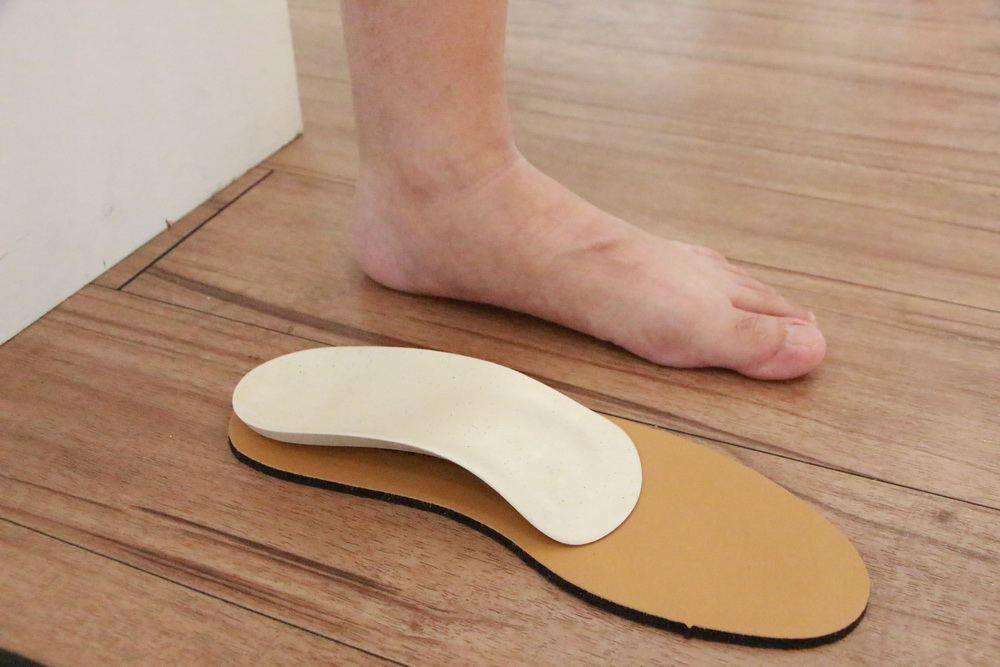
Functional flat feet, also known as “hidden flat feet,” occur when the arch appears normal while the foot is off the ground. However, once the foot bears weight, the arch collapses and becomes flat. Many people don’t realize they have this condition until discomfort begins to show.
Structural flat feet, on the other hand, remain flat whether or not the foot is bearing weight. Congenital flat feet fall into this category, often caused by issues in bone alignment that affect the way the tarsal joints form. Severe cases of acquired flat feet may also progress into structural flat feet over time.
Here are the 9 most common symptoms of flat feet for your reference:
- Little or no arch along the inner side of the foot
- Heel pain that appears when standing or walking
- Frequent foot or joint discomfort
- Feet that turn inward or outward while walking (in-toeing or out-toeing)
- Tendency toward knock knees (X-shaped legs)
- Higher-positioned or tilted hips
- Ingrown toenails developing easily on the big toe
- Shoe heels wearing out quickly
- Proneness to tripping or instability when standing
How Can You Tell If You Have Flat Feet?
Try the simple “Footprint Test” at home.
Wondering whether you might have flat feet? A quick and easy way to find out is by using the Footprint Test, which lets you check your arch type right at home and better understand
your foot condition.
Flat Foot Assessment Method: The Footprint Test
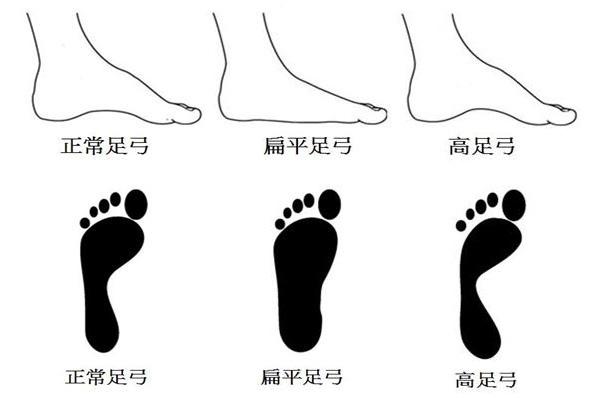
Prepare a piece of kraft paper or newspaper and place it flat on the floor. Fill a small basin with about one-quarter full of water. Wet one foot, then step onto the paper to leave a footprint. Repeat with the other foot. Once both footprints are on the paper, take a close look at the marks left behind—this will help you identify which type of foot arch you have. Below, you’ll find explanations of the three main arch types and the kinds of footwear best suited for each.
1. Normal Arch
On the paper, you’ll see an even imprint of the front and back of the foot, while the arch area appears lighter or partially missing—typically about half the width.
If you have a normal arch, most regular athletic or casual shoes will work well. However, we recommend stability-type shoes for optimal mid-arch support and long-term comfort.
2. Flat Arch (Flat Feet)
Most of the footprint will appear fully colored in, showing almost the entire shape of your foot. Since flat feet tend to be broader, look for wider shoe designs, outsoles with built-in curvature (a raised mid-arch “shank”), and firmer heel counters for added stability. Shoes with reinforced material on the inner arch can also help.
If needed, consider using specialized insoles for extra support and to reduce pressure on the soles.
3. High Arch
The footprint will show a large empty space through the middle—much more than in a normal arch. If you have a high arch, opt for footwear with strong cushioning and shock absorption. Custom or supportive insoles may also help improve comfort and alignment.
(The above method serves as a self-assessment reference for identifying flat feet. For an accurate diagnosis, please consult a qualified medical professional or specialist.)
How Do Flat Feet Affect Daily Life?
Living with flat feet can cause various forms of discomfort in everyday activities. Below are 8 common issues people with flat arches may experience—keep an eye out for these signs:
Foot pain that develops easily
Increased risk of sciatica
Added strain on the cervical spine (neck area)
Difficulty staying focused due to discomfort
Poor balance or instability
Frequent calf cramps
Abnormal wear and tear on the knee joints
Higher chances of developing ingrown toenails
So, what can you do to ease these symptoms or reduce the impact of low arches on your feet?
4 Key Ways to Care for Your Feet Daily
While collapsed arches are difficult to fully correct, the right care routine can significantly reduce foot pain and lighten the burden on your lower limbs. Here are four effective strategies to help protect and support your feet if you struggle with flat arches:
1. Maintain a Healthy Weight
Whether you’re standing or walking, your feet carry your entire body weight. The heavier you are, the greater the pressure placed on your arches—especially for those with naturally low arches, which can make the collapse even more pronounced.
If you have flat feet, keeping a healthy weight and avoiding a BMI over 30 can help ease discomfort during daily movement.
For individuals with a higher body weight or a busy lifestyle, the 16:8 intermittent fasting method may be a simple option to promote fat burning, regulate eating patterns, and support gradual, healthy weight management.
2. Foot Soaking
Your feet are often called the “second heart” of the body. When you walk, your foot arch and calf muscles work together to help pump blood back toward the upper body. However, prolonged standing, aging, or injuries can weaken arch elasticity and reduce calf muscle strength, slowing circulation and contributing to chronic discomfort.
A warm foot soak helps boost blood flow, relax tight muscles, and ease pressure on the soles—making it an easy yet effective daily foot-care ritual.
3. Foot Exercises
When we walk, we mostly use the thigh and calf muscles, while the feet and ankles—usually wrapped in shoes—get less chances to stretch and strengthen.
While seated, try gently rotating your ankles or curling your toes to build foot muscle strength.
When standing, you can rise onto your toes to relieve pressure on the heels.
Before bedtime, consider doing legs-up-the-wall stretches. Similar in concept to warm foot soaking, this position uses gravity to help redirect blood flow toward the heart—simple, equipment-free, and excellent for foot wellness.
4. Wear Properly Fitted Shoes
Your feet bear 1–2 times your body weight when walking, up to 3 times when jogging, and over 6 times during high-impact exercise. This is why a good pair of shoes can make all the difference—helping distribute pressure, protect your feet, and reduce injury risks.
But with so many shoe options on the market, how do you choose the right pair?
8 Key Tips for Choosing the Right Shoes — Find the Perfect Fit for All-Day Comfort
Studies show that only about 25% of people have a standard, neutral foot shape. Wearing shoes that don’t match your foot type doesn’t just cause discomfort — it can also increase your risk of injury.
That’s why choosing the right pair of shoes is essential for protecting your feet. Below are 8 important tips to help you understand your foot shape and find footwear that truly fits.
Tip 1: Always Try Shoes On With Socks
When testing new shoes, make sure you’re wearing socks. Use sports socks for athletic shoes and thin cotton socks for dress shoes to ensure accurate sizing.
In daily wear, socks also help reduce friction between your foot and the shoe, preventing irritation.
Tip 2: Walk Around — Don’t Just Try Shoes Sitting Down
Feet expand when standing and walking, and toes naturally spread out — this affects length and fit.
So always stand up and walk around during fitting sessions to mimic how the shoes will feel in real-life use.
Because sizing varies across brands and between Western and Asian shoe charts, avoid buying shoes based solely on a fixed size or through someone else — always test them yourself.
Tip 3: Leave Adequate Space at the Front of the Shoe
After securing the heel and tying the laces, check that your longest toe (big toe or second toe) has about 1.5 cm of space from the front.
Insufficient space can cause toe compression, especially when walking downhill.
Also observe whether the big toe joint bends comfortably.
Shoes that are too small misalign the shoe’s bend point and your toe’s natural bend point, causing fatigue.
Shoes that are too large let your foot slide inside, affecting balance and gait.
Tip 4: Shop for Shoes in the Late Afternoon
Feet naturally swell throughout the day due to gravity and circulation, so late afternoon is the best time to shop.
This ensures that the size you select will remain comfortable all day long.
Since most people have one foot slightly larger than the other, use the bigger foot as your sizing reference.
Tip 5: Avoid Narrow Toe Boxes and Excessively High Heels
The toe box affects not just width but also the entire interior space.
Good shoes should gently support the sides of your foot without squeezing your big or little toe.
Since many Asian feet are naturally wider, choosing a wider toe box is often more suitable.
Avoid high heels as well:
The ideal heel height is around 3 cm
Avoid going above 5 cm
Every additional centimeter dramatically increases strain on the lumbar spine and back muscles.
Shoes with ankle straps also help prevent sprains.
Tip 6: Choose Shoes With Laces or Adjustable Straps
Shoes with laces or hook-and-loop straps allow you to fine-tune tightness based on changes in foot shape throughout the day.
Laces help adjust both forefoot and ankle support.
For older adults or individuals who prefer convenience, Velcro straps are an excellent alternative.
Tip 7: Check the Size and Height of the Shoe Opening
Look at the shoe opening from above.
If the opening is too wide, the ankle won’t be stable, increasing friction and discomfort.
Also pay attention to the height around the ankle:
The inner ankle bone is naturally higher
If the outer side of the shoe is too high or both sides are equal in height, the outer ankle may get rubbed and irritated
Tip 8: Choose Materials With Balanced Firmness and Good Breathability
Sole firmness is critical:
Shoes that are too soft can cause the foot to sink in, increasing the risk of sprains or heel misalignment
Shoes that are too hard transfer impact directly to the bones, potentially causing lower back pain
Choose soles with moderate firmness to support the arch and absorb shock effectively.
Breathability also matters.
Synthetic leather or plastic materials trap heat and moisture, increasing the risk of odor and fungal infection.
Opt for natural leather or ventilated mesh fabric for better airflow and long-lasting comfort.
Final Tip for Flat Feet
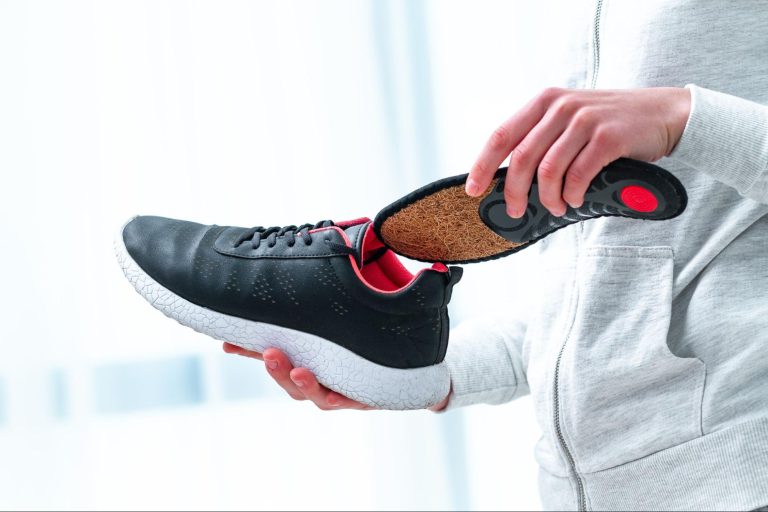
If you have flat feet, it’s especially helpful to choose shoes that include built-in arch support insoles. These provide better stability, reduce fatigue, and increase overall walking comfort.
Want to improve fallen arches and reduce the daily inconvenience caused by flat feet?
The GoodARCH TFE Corrective Arch Support Shoe Set is your best choice!
Developed by a professional team, the Technology-Patented Arch Support Insole is created through the collaboration of experts in biomechanics, ergonomics, orthopedics, material science, and traditional Chinese meridian studies, ensuring that the arch support is fully aligned with human biomechanics.
With the combined power of far-infrared rays, silver ions, and negative ions, the team successfully developed an arch corrector tailored to your personal needs. It offers complete arch support and correction, secure foot wrapping, and enhanced stability while walking.
With it, even those with flat feet can walk better and more comfortably!
References:
American College of Foot and Ankle Surgeons (ACFAS). Flexible Flatfoot. Wayback Machine.
Shu-Zon Lou, Fong-Chin Su & Yu-Chi Chen. Effects of Arch Support Insoles on Gait Patterns of Patients with Knee Osteoarthritis. Published: March 26, 2015.
Chen, Yu-Chi. Analysis and Simulation of the Impact of Functional Insoles on Gait. National Cheng Kung University Institutional Repository.
※Column Author – Manager 郭清輝
Current Position: R&D Manager of Arch Correction Footwear at GoodARCH
Education
Certified National Footwear Technician
Bachelor’s Degree, Department of Chemical Engineering, Southern Taiwan University of Science and Technology
Experience
24 years of experience in developing various men’s and women’s footwear, specializing in lasts, pattern making, and shoe structure
Former Head of Design & Development at an international luxury footwear export company
Judge for footwear design exhibitions at the Footwear & Recreation Technology Research Institute
※Column Author – Chairman 謝東辰
Current Position: CEO, Homeway Biotech Corporation, USA
Education
Bachelor’s Degree in Traditional Chinese Medicine, Jiangxi University of Traditional Chinese Medicine
Master’s Degree in Traditional Chinese Medicine, USA
PhD Candidate in Scientific Chinese Medicine, Nanjing University of Chinese Medicine
Experience
Lecturer in Traditional Chinese Medicine, Kingston University, USA